7/1/2026 11:15:00 AM | General
NASHVILLE -- Ten years ago, Lipscomb's athletics fueling station began as a simple idea: provide student-athletes with the nutrition they need to perform at their best. Today, it stands as one of the department's most transformative resources, shaping not only how athletes eat but how they learn, connect, and prepare for life beyond sports.
"I'm biased, but, in terms of enhancing the student-athlete experience, I truly believe the fueling station has been one of the biggest wins for our athletics department and the university over the last decade," said Ann Toy, Director of Sports Nutrition and Assistant Professor of Dietetics, who has guided its growth from day one.
More than a place to grab a quick snack, the fueling station has become a hub of daily life—fueling bodies, building relationships, and creating hands-on learning opportunities that reach far beyond the walls of Allen Arena.
A Home Base for Performance
The fueling station's primary mission is simple: keep student-athletes fueled and ready to perform. But behind every smoothie, sandwich, and recovery snack is a carefully planned system designed to meet the demands of high-level competition and rigorous academic schedules.
"Providing nutrition in a way that supports high performance requires much more planning, coordination, and intentionality than most people outside of athletics probably realize," Toy said. "The fueling station serves as the home base for nearly every meal, snack, and supplement our department provides."
For athletes balancing classes, labs, and training, access to convenient, high-quality nutrition can be the difference between showing up ready or running on empty. The station's strategic location—situated at the crossroads of Allen Arena—means athletes naturally pass through throughout the day, turning everyday moments into chances for education and connection.
"Over time, the fueling station has become much more than a place to grab food—it's become a space where athletes feel welcomed, supported, and known," Toy said. "While nutrition and performance education remain at the core of what we do, it's also where relationships are built, life is shared, and community grows."
Growing Beyond the Counter
The fueling station officially launched in 2016, realizing Toy's dream. The first sports nutrition interns joined athletics that year to help start the fueling station, which, at the time, consisted of a folding table and a rolling cart.

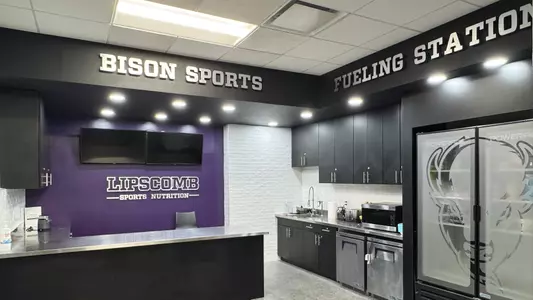
After seeing the impact of the fueling station, the athletics department raised funds during its 2019 Day of Giving to give the fueling station a permanent home in Allen Arena, where it has been housed since.

While the physical space hasn't changed dramatically since its opening in 2019, its impact has continued to expand. Small upgrades—like bullet blenders, induction cooktops, and toasters—have transformed the station into a functional classroom, creating space for cooking demonstrations and hands-on lessons.
"These additions have created more opportunities for cooking demonstrations, nutrition education, and hands-on learning for our student-athletes, while also giving our interns valuable teaching experience," Toy said.
For students in Lipscomb's Department of Nutrition, the fueling station serves as a real-world extension of the classroom. Undergraduates complete practicum hours at the station, gaining a firsthand look at the everyday realities of sports nutrition—from crafting meal plans to managing food service and navigating the unglamorous tasks that come with the job.
"It's an opportunity for them to experience the day-to-day realities of sports nutrition—not just the exciting moments, but also the behind-the-scenes work that makes everything possible," Toy said. "Those experiences help students develop a more realistic understanding of the profession while reinforcing that excellence often comes from consistently doing the small things well."
Fueling a Pipeline of Sports Nutrition Leaders
The fueling station's impact extends into Lipscomb's graduate program, which was among the first in the country to offer an immersive sports nutrition concentration. Before the station existed, hands-on learning meant working from a rolling cabinet and a folding table. The addition of a dedicated space changed everything.
"The fueling station gave our program a true home," Toy said. "It elevated the learning environment and provided a dedicated space where graduate students could apply what they were learning in a real-world setting."
As graduate students took on greater responsibility operating the station, they built the clinical and practical skills that employers value—confidence working with athletes, the ability to problem-solve on the fly, and experience delivering education one conversation at a time.
"Because our students trained in that same environment, they entered the workforce with hands-on experience and confidence that set them apart from many of their peers," Toy said.
Today, Lipscomb alumni are serving in collegiate and professional athletics, tactical nutrition with the U.S. Army Special Forces, and private practice. Recent placements include organizations such as Nashville SC, LSU, the University of Wisconsin, the Philadelphia Eagles, Virginia Tech, and Texas Tech.
"When employers hire one of our graduates, they aren't hiring someone who has only studied sports nutrition from a textbook—they're hiring someone who has already practiced it," Toy said. "That level of experience helps our graduates enter the field with confidence and a stronger understanding of what it takes to be successful."
The Heart of the Department
Ask Toy what she's most proud of, and she points not to equipment or curriculum, but to the culture that has grown around the station.
"The kitchen is the heart of the home, and the fueling station really serves that role within our athletics department," she said. "It has become a place where student-athletes come not only for food and nutrition support, but also for connection, encouragement, and community."
That sense of belonging is intentional—rooted in Lipscomb's emphasis on relationships and holistic development. Through simple, everyday interactions, the fueling station teaches skills that last long after a playing career ends.
"I'm most proud that the fueling station has become such a meaningful space and such a valuable asset to our department," Toy said. "We have the opportunity to help student-athletes develop confidence, build healthy habits, and gain knowledge that can support them both during their careers and throughout their lives."
A decade after its creation, the fueling station continues to do exactly what it was designed to do—and so much more: nourish, educate, connect, and prepare the next generation of leaders in sports nutrition.