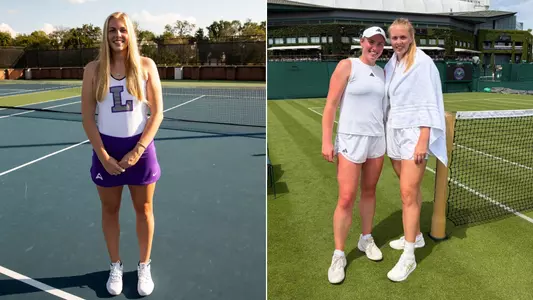
Women's Tennis Alum Madeline Brooks to Compete at Wimbledon
7/1/2026 3:04:00 PM | Women's Tennis
Earning one of the seven wild cards in Ladies Doubles, the 2019 graduate and Norfolk, England native will play on Thursday.
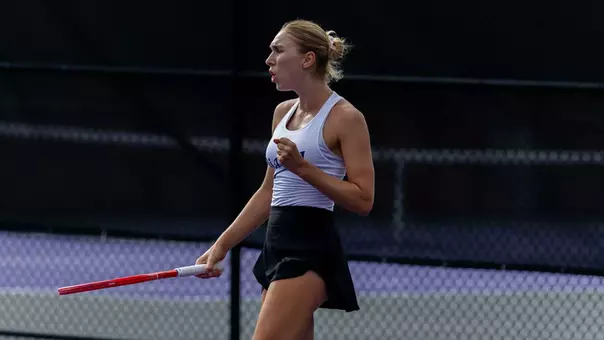
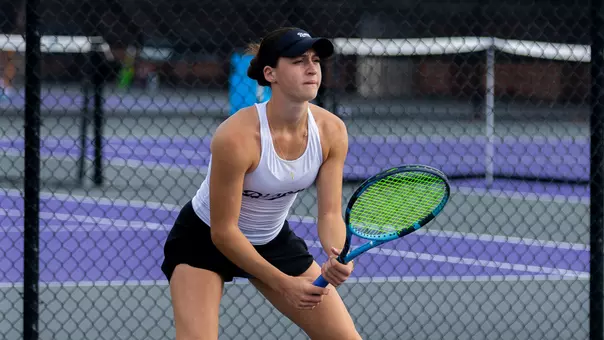
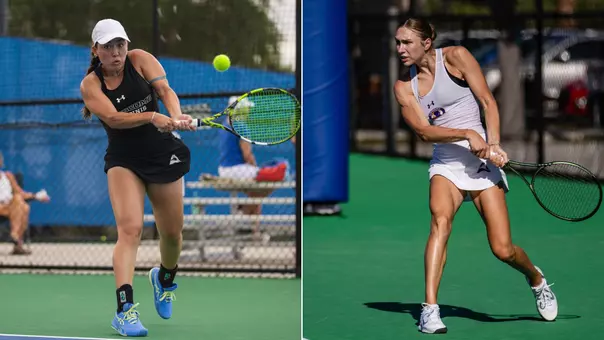
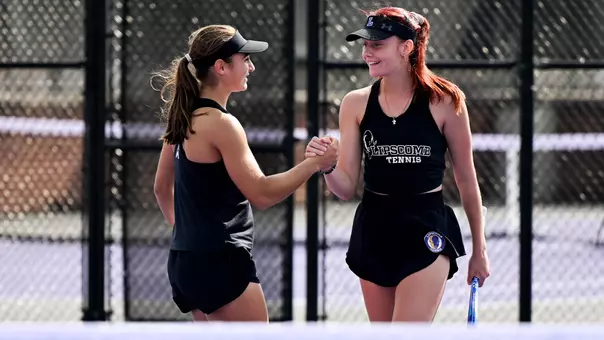
NASHVILLE – Lipscomb University Women's Tennis will have a representative at the Wimbledon Championships as a doubles participant, and after finding her love for tennis again at Lipscomb, British native Madeline Brooks earned one of the seven doubles wild cards in Ladies' Doubles.
At the time of the press release, she will open play on Thursday on Court 16. The matchup will be the last contest on the day on that court, with three singles matches that are scheduled before then. Coverage begins at 5 a.m. CST (11 a.m. BST), and the event will be streamed on ESPN Unlimited.
Graduating from Lipscomb in 2019 with a degree in Corporate Marketing, she was a two-time All-ASUN Second Team selection during the 2018 and 2019 seasons with the Bisons.
Playing with doubles partner Amelia Rajecki, the duo will open play later this week against 7-seeded Laura Siegemund and Vera Zvonareva of Germany.
Entering the tournament with a Women's Tennis Association, or WTA, doubles ranking of 116, she has posted 147 wins in her professional career.
There are only seven doubles wild card spots available. The Wimbledon website defines wild cards as:
- Players whose world ranking is not high enough to qualify automatically for The Championships but who are accepted into the main Championships draw at the discretion of the Committee.
- Wild cards are usually offered on the basis of past performance at Wimbledon or to increase British interest.
A native of Norfolk, England, three hours away from the All England Lawn Tennis and Racquet Club, she is about to live the dream of every British tennis player: walking onto the grass courts at Wimbledon with her name on the draw. It's a moment that's been years in the making—one built on unexpected beginnings, hard choices and a belief that tennis could still be fun after it nearly broke her.
Now, as she prepares for her first Grand Slam main-draw appearance in doubles, Brooks isn't treating it as a finish line. She's treating it like any other match, even if the venue is the sport's most iconic stage. Obviously, it's a dream come true, but I'm not just thinking, 'Oh, it's great to be here,' she said. Anything can happen on any day. If we play well and impose our strengths, the way we play will not be easy for any opponent.
An Accidental Beginning
Brooks didn't grow up in a tennis family. Her introduction to the sport came by chance when friends invited her to a summer camp at a local park. It was kind of a complete accident, she said. One of the coaches spoke to my mom after the first day and said he thought I had some talent. It stemmed from there.
What began as a casual activity quickly turned into something more serious. She climbed through the British junior ranks, eventually finishing eighth nationally in the under-18 division. Along the way, she earned a taste of the Wimbledon experience as a teenager, winning doubles at an under-14 event held on the club's practice courts. It was a great experience playing on the grass here for the first time, she said. It's nice to be back now competing at the proper championships.
Before she ever competed at Wimbledon as a player, Brooks saw the tournament from a different angle—literally. During her college summers, she worked as a data analyst with IBM at The Championships, sitting in a box behind the court to track scores and stats for the broadcast. It was a cool way to be here and get paid to watch tennis, she said. Going from being a spectator to working here and now playing here is a pretty cool circle.
Finding Her Place at Lipscomb
Brooks' path to Lipscomb wasn't straightforward. She first committed to Middle Tennessee, but unforeseen circumstances during her recruitment led to a tough experience that nearly ended her tennis career.
Everything changed when she met Lipscomb head coach Jamie Aid. We actually met in the Starbucks of a Kroger, Brooks said with a laugh. She just seemed so passionate and caring as an individual. She saw past the tennis player and looked at what I needed as a person.
That people-first approach helped Brooks rediscover her love for the sport. Coming to Lipscomb probably stopped me from quitting tennis, she said. We had a really good group of girls, and it felt like a family. When you have people around you that genuinely care, you trust them 100 percent.
Brooks still considers Aid and associate head coach Dwight Dale to be lifelong friends—part of a support system that turned her college years into a foundation for everything that followed. The big regret we probably all still have is not winning the ASUN championship, she said. But we built something so strong. We still have tons of group chats we regularly communicate in.
From College to the Pro Tour
After graduating with a degree in corporate marketing, Brooks wanted to stay in the United States but couldn't because of visa restrictions. She returned home and faced another crossroads: go all-in on tennis or move on. The onset of COVID-19 complicated everything, forcing her into a holding pattern as the world shut down. After COVID it was like, I need to make a decision, she said. If I'm gonna do it, I've got to put everything into it.
That decision took her to Bath, England, where she trained at an academy with a professional structure—four hours a day on court, no classes, no distractions. It was one of the few places in England where I could just focus on tennis, she said. There's a time limit with an athletic career. I can always go back to education.
Now in her third full year on tour, Brooks has found her stride, primarily in doubles. I'm very happy to be where I am right now, she said. I've done pretty well quite quickly, starting this much later than a lot of girls. That unique timeline has given her a different perspective on the grind of professional tennis. She's played high-level events and faced opponents ranked in the top 20 and 30 in the world, experiences that have prepared her for what's next.
The Call She'd Been Waiting For
Brooks' Wimbledon opportunity didn't come easily. She and her partner, Amelia Rajecki, met the selection criteria for a doubles wildcard, but nothing was guaranteed. They're quite loose with the criteria sometimes, Brooks said. We've never been in the system, never got funding, so you're not quite sure what they're going to do.
A strong run to the final at a WTA event in Ilkley put them in a great position—until they lost to another British pair in the final. Once we lost to the other Brits, I was thinking that was potentially gone, she said. From the Saturday of the final to the Monday morning meeting, it was pretty stressful.
The call finally came while she was on a train to the airport, heading to a tournament in Portugal. The guy who called me sounded really down initially, and I was like, 'Oh God, it's bad news,' she said. Then he said, 'You've got the wildcard,' and it was just such a huge relief.
Now, Brooks and Rajecki are set to face the tournament's seventh seeds—an experienced German duo featuring former world No. 2 in singles and top-10 doubles players. It's gonna be tough, Brooks said. But anything can happen on any given day. With our strengths, we can hurt anybody.
For Brooks, the moment is bigger than the draw. It's about proving to herself that she belongs on this stage—and showing others that perseverance pays off. A lot of people have been saying it's unbelievable that I've reached Wimbledon, she said. For me, I'm extremely happy, but I've got to treat this like any other tournament. The level really isn't that different—it's just about who can perform better on the day.